Julie and Candy
For Eric Sanday, and for Katherine Loewy, and for the 2003 Summer in Prenzlauerberg This is “Julie and Candy”, song by Boards of Canada: https://www.youtube.com/watch?v=vuG39sZxMp8

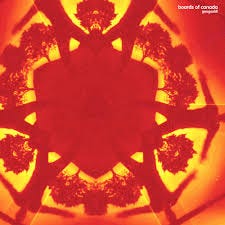
I
There is an English expression, “rhyme and reason.” The connection between rhyme and rationality seems to be regularity. This is something I noticed when I was putting my daughter to sleep making up songs and noticing the soothing and assuring cadence of rhyming sounds.
But, it seems, a rhyme must create sameness and unity where none is to be found. The rhyme must be interesting. “Pete” and “repeat” form an arguably lame rhyme, because the difference between the two is trivial, and their unity is accidental. (Of course, this is a challenge: a good poet or rapper would be able to precisely use these two words in their rhyme in a compelling way – proving my point.) Thus, the challenge to regularity must be intriguing. It must be like a good question, just as the unity to be reached through that question must be like a great answer that somehow adds to the question a significance that it didn’t have beforehand. Like a great speaker lifting up a lame selfish asshole question during a Q&A session in a conference by framing it into a much higher totality at the surprise of everybody including, indeed, the questioner.
Now, Boards of Canada’s music, like many electronica artists’ music, exploits a specific kind of regularity in setting up this Q&A structure: it is neither a merely harmonic regularity, nor melodic, nor rhythmic… The regularity is like a meta-regularity, a regularity between various layers that have their own “local” Cycloptic regularity. It seems to me that ready-made artworks, DJ sets, at least some of Bach’s keyboard music etc. precisely exhibit this virtue: they rehash stuff within a new meta-framework that brings out unexplored potentials within each of the “local” regularities (interestingly called “motifs”).
Note that this larger scale “augmentation” or “relaunching” of “local” layers of sound and meaning creates a specific kind of joy: the joy of the realization that meaning is infinite, that each piece of the world and life is eternal in that they are all susceptible to be “amplified” within a more complex, less predictable, but equally “unnecessary” meta-narrative – a matter of derision among the gods.
Now, if so, the layers must be selected and arranged in such a way that they are question-formed, that they summon an answer that is nowhere to be found. And the “answer” must be at least as interesting as the question, and it must feel spontaneous, unlike, say, a Hollywood ending. The answer must almost override the question while answering it, such that the dynamism is not exhausted with the answer. But also, or alternatively, it seems, the answer must not be definitive, fall short of the question, but be “humorous”, or “ironic”, so to speak, creating more problems than it was supposed to solve. And perhaps that dissatisfaction or inadequacy would be the “answer”.
This is how this kind of music or art generally “imitates” life (and history, and the world, and despair), and create an opportunity for us to contemplate it and view it from a distance with both the twisting of a thorn in our heart and an unstoppable smile on our face.
This mixture of joy and melancholy seems to feed into the much noted nostalgic and childhood-like feel of Boards of Canada’s music – the use of “old” natural lived samples within a “modern” artificial framework, indeed “the past inside the present”. Note that this is not an empty, mechanical “fractal” structure since it gives rise to novelty, surprise, disappointment, humor, etc. So the structure and the subtending general feel of BOC’s music gesture toward Bergson’s philosophy in general, this “creative evolution”, but also to an idea that found in Hegel, I think – namely that if anything resembles the human being, in her unalienable transcendence, perpetual meaning-production, and endless potential for recontextualization, that thing is time – that is, the aggregate irony of every moment to any other including itself.
There is more I’d like to write about this (about the nostalgic feel of BOC, about the specific kind of sentimentality that emerges from their music, about the dialogical rationality (vs. the propositional rationality) that this music suggests, etc.), but now I’m tired.
Peace and love.
II
One thing that I meant to talk about in my previous note was these moments in BOC’s music (and of course in much of other music, especially electronica perhaps, maybe also rock and jazz) where the layers of sounds and meanings one added on top of the other result in a state of saturation, even oversaturation, where the layers are either too much or overall too complicated for the listener to digest perceptually or mentally. This experience of overflowing or excess is reminiscent of what Kant tries to capture with the “sublime”.
In setting up and sustaining this oversaturation, there is one element that plays, I think, a crucial role: noise. The Kantian free play between sensibility and concepts definitive of the artwork takes place in the space of noise. There are different ways in which noise can be incorporated into music. First, most obviously and bluntly, one would take noise as such on a par with music (cf. John Cage). Secondly, one can think of noise as adding a gritty, raunchy feel to sound as in grunge or punk. But the kind of incorporation of noise into music in BOC involves a “mental” noise, for lack of better word, rather than an acoustic noise.
It is not that there is noise that prevents the ear from hearing. It’s rather that the layers of the music get so saturated, so sedimented that some of them are postponed, differed, but merely noted by our memory as something excessive, like some words we sometimes hear in a conversation without having the time to understand and process and place in a momentary “shelf” of our memory in order to turn to this excess material shortly after. (Think of the huge wave and the surfer in “Dayvan Cowboy”). The problem is, Boards of Canada keeps offering new excess material such that the hearing process is paralleled, dubbed by our short term memory constantly overworking – like a restaurant that’s working %10 percent over its capacity or something… This puts our mind and soul in a funny state of suspense, of insufficiency, of being inadequate to something that exceeds us, looming chaos or imminent death. (Cf. the freedom of play in Kant.)
But there is more. Or rather, there must be more. Because the experience I described does not sound pleasant at all, and yet BOC’s music is utterly beautiful. So, I guess, the music orients the struggling mind and soul to their own experience of not living up to the experience they are having, highlights this mismatch, and thereby enables the mind and soul to experience themselves in their inadequacy. This is like the motionless cheerleader at the top of a pyramid of her insensibly shaking peers. This, it turns out, is a way of dealing with inadequacy (limitation or finitude), a way to rejoice a subtle kind of power in one’s possession: the power to recognize one’s inadequacy and to love oneself loving something else.
Clearly I am overinterpreting. Let me overinterpret one last bit, while I am at it: The last level of the experience of listening to “Julie and Candy” by Boards of Canada is that of noticing how the listener whose frustrating inadequacy is taken up into a higher, joyful experience of recognizing that inadequacy mimics the way the layers of the music were taken up into the musical meta-narrative that I was talking about in the previous section.
Just as the nostalgic layers, which are a hallmark of Boards of Canada’s music, add up to a futuristic sounding whole, just as the past gets taken up inside a future, the listener experiences the courage and joy of recognizing that one is capable of loving oneself in one’s utter vulnerability, precariousness, and stutter, with, not a bang, but a whimper.